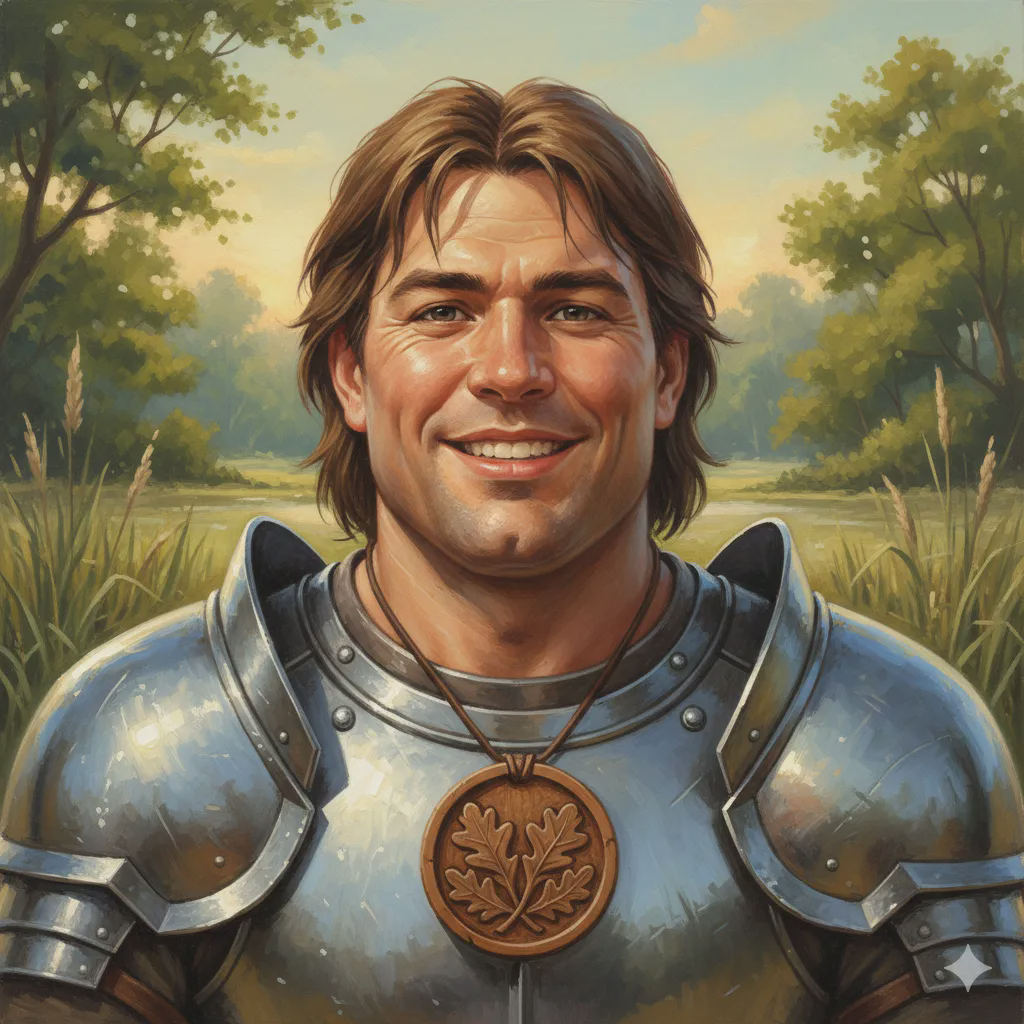
Nothing wasted
On a farm, nothing is wasted. That is not a sentiment, it is a fact about how a farm stays solvent. The ox that goes down in the traces is butchered before it turns, and the parts nobody will eat go to the dogs, and the parts the dogs won't take go into the ground where the beans will be, and by autumn some of that ox is beans. You do not stand over it and make a speech. You get the knives, because the alternative is that a year of hay and a winter of your own labour rots in the yard and teaches you nothing.
Bancroft was raised on that and he believes it. It is one of the plainer things Silvanus asks of a man, and one of the few he has never had trouble with.
Then somebody said it out loud about Irulan, in almost those words, and he found he had nothing to say back.
In the dark with the mongrelmen
They sat in the black a long while with their lights out, in a room that smelled of old fur and older meat, listening to the dead go past the door.
There were five of them in there, or six -- it was impossible to count in the dark, and all he ever saw of them was eyes. The mongrelmen had opened that door while the party was coming apart in the hall outside and had hauled them in, and had asked nothing for it, which by itself should have told him what the asking would cost later. One of them had gone out and made noise in the hall to draw the dead away and had come back pleased with himself. Another sat close enough to touch and told them, kindly enough, to be quiet and it would pass, and remarked that they were all of them very pink and had no fur to speak of.
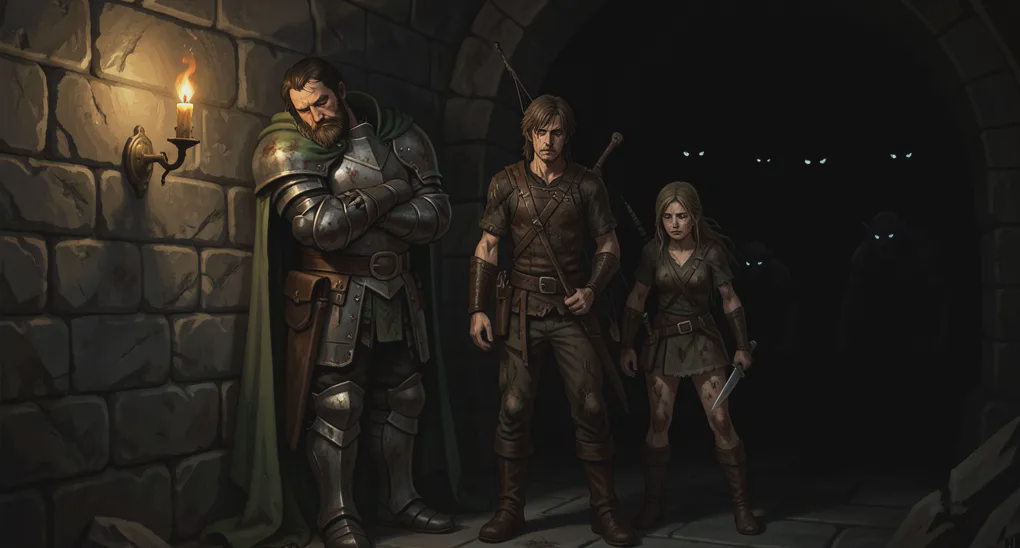
Irulan was not in the room. She had gone down not long before, at the end of the fight the party had just lost, in a hall with too many doors, and she had gone down covering the retreat that got the rest of them out. Nobody had seen where she fell. Nobody had gone back.
Anister asked if one of them would go and look for her.
The one they called Dirty Fist thought about it and asked a question that Bancroft has not been able to put down since. He asked whether she was important to them, or whether she was food.1
Anister said very important. Bancroft did not say anything, because he was ashamed to find that the question was a real question and that a stranger in the dark had been right to ask it. He had sat down in that room and got his breath back and let the time run, and in all of it he had not once said her name out loud.
Dirty Fist went out. The door creaked and there was a long stretch of nothing, and then he came back and said she was dead, and that he had not eaten her.2
He said it the way a man says he did not track mud into your house. It was meant as a courtesy and Bancroft understood that it was one.
What she wanted
The mongrelmen wanted the body.
They did not demand it. They asked, the way you ask for the parts of the ox nobody else is going to use, and they pointed out -- reasonably, because it was reasonable -- that she was not going to be carried up a sixty-foot shaft by four people who could barely carry themselves, and that she was going to be left in this place either way, and that the only question was whether anything came of it.
Bancroft prayed about it. He is not going to pretend it was a long prayer or an eloquent one. He asked what to do with her and he waited, and what came back was not a voice and not a sign. It was a feeling, and the feeling was that it was all right.
That is worse than being told. A man can argue with a voice. A man can check a sign against what he knows. A feeling arrives already agreeing with you, and there is no way on this earth to tell the difference between the green god's answer and the part of yourself that wanted permission and went looking for it in a quiet moment. He does not know which it was. He is fairly sure he never will.
And the argument for it was his own argument, that was the thing. She had come to Silvanus. Everything goes back. The wolf eats the deer and the grass eats the wolf and there is no insult anywhere in it, and a man who has put a dead ox in a field has no standing at all to come over faint about the principle when it is his friend on the ground.
So they made a bargain. The mongrelmen would fetch her back and the party could take her gear, and afterwards she was theirs.3
Anister said only that he did not want to watch, and asked if they would wait until the party had walked out of the room. The fat one, who was called Fatty and who had been making his interest plain for some time, said that he did not like people watching him eat anyway.
They brought her in and set her down. There were already bite marks on her shoulder.
Nobody said anything about that. Nobody knew whose they were. She had lain where she fell in a hall full of walking dead, and the dead down here do not ask, and the men who fetched her had come a long way in the dark with her over their shoulders and were very hungry. It could have been either. It could have been both. Bancroft looked at it for as long as he could stand and decided it did not change anything he had already agreed to, which is true, and which is not much comfort.
Dividing her up
Then they went through her things, with five pairs of eyes leaning in to watch, delighted, oohing at every buckle that came up out of the dark.
Her mail. Her sword. He took the sword because he keeps losing his own, and Anister said so out loud, and nobody argued the point. Her flint. Her rope ladder, which none of them had the arms to carry and which ended up with the woman from the corner, who had nothing else to hold.
And her holy symbol, a length of yew, cut and bound by somebody's hand. He took that himself and did not say why. There will be somebody else, eventually, who comes to the green and needs a thing to hold, and it is a waste to leave good yew in the dark.4
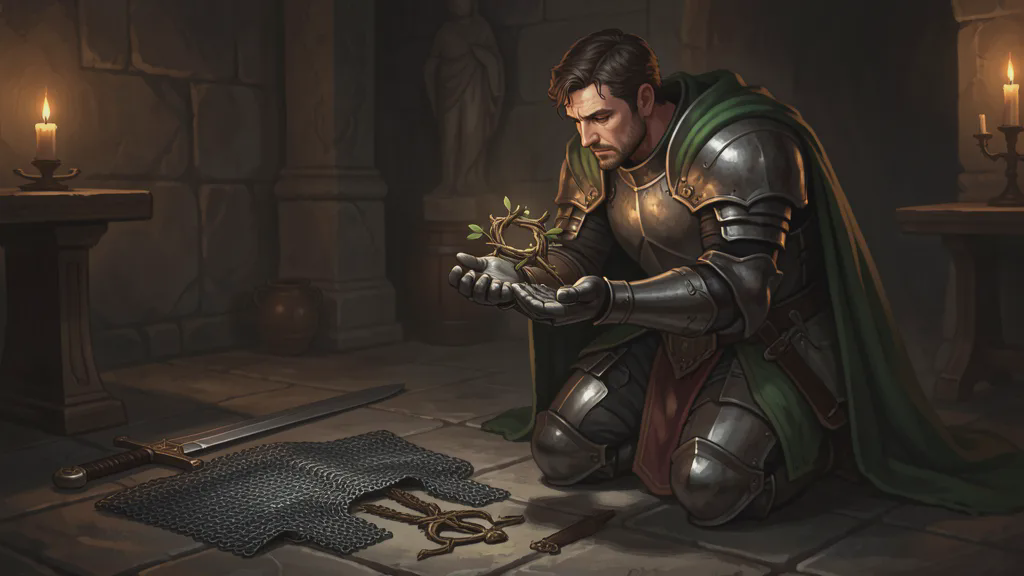
Fatty had to be told twice to stop nibbling on her while they worked.5
Anister traded away every iron spike they had for a tarnished bowl of shiny rocks, and was extremely satisfied with the arrangement, and Bancroft heard one of the mongrelmen say suckers into his own chest as he walked away with the spikes.6
That is the part he keeps coming back to. Not the eating. They divided up her kit in front of an audience and haggled over spikes across her body, and it took the best part of an hour, and it was all completely ordinary. That is what the deal actually looked like from the inside. Not a horror. An inventory.
The woman in the corner
There was a woman asleep against the far wall the whole time.
When the light came up she stirred and sat and said thank God, real people, and that they had been keeping her here forever -- which might have meant sheltering and might have meant something else, and she did not seem certain herself, and the party had just finished making a bargain with those same hosts and was in no position to press it. She had gone down here with another company. All of them were dead. She had gone down in the dark somewhere and come up in the hands of the mongrelmen, and could not account for the middle part.
Around her neck, on a cord, next to a rock she was unreasonably attached to, was the key to Irulan's room at the inn.
He did not ask. She said it herself, plainly, the way you state a fact that has stopped being remarkable to you: Irulan freed her.
Bancroft has travelled with people for years and never learned half of what they did before he met them. He knew this about Irulan without ever having been told, the way you know a man's character from how he handles a gate. So he looked at the key and he looked at the woman wearing it and he did not need to know one thing more about her.
He never did get her name. There was no moment for it. She was groggy at the start and there was a fight in the middle and by the end of it he was on the floor. She is a slight thing, no armour, no spellbook, not enough of her to stop anything, carrying a rope ladder she cannot use alone and a rock she likes.
She is also the only one of her last company to walk out of this place, and she is one of the two still walking now.
They went down anyway
They should have gone back to town. Bancroft knew it at the time and said a version of it.
Anister's argument was that nothing is gained by being safe, that the room they had bled in was still full of whatever had killed Irulan, and that if they went home to heal, some other outfit would come down and take everything they had paid for. This is true and it is also how everyone in this profession dies. They took a vote of sorts and went down the hall toward the room, and the ranger chewed something that promised he could not be caught unawares, and everyone else was caught unawares immediately.7
Clarisse went ahead to look, and did it as well as she has ever done anything, and it did not matter -- whatever was down there was listening just as hard.8 Something came out of the black and smashed the lantern at her feet.
Bancroft called for light and got it.9
They were surrounded. Six of them, three on their feet and three in the rags of skin, and every single one wearing a robe.
He would like it recorded that Clarisse had said the room looked like a necromancer's room, days ago, and had been told she was jumping at roses carved in a wall.
The screaming
They tried to hold the corridor, the way you hold a gap in a hedge -- two men shoulder to shoulder where only two can come at you, which is the only tactic that has ever worked for this party.
The dead did not fight it. They pushed past. They went shoulder-first through the line and out the other side, ignoring men with swords in order to get at a woman with a dagger and a woman with a rock, and when Bancroft and Anister planted themselves the dead simply spent the effort and squeezed through. They opened doors to get at the people sheltering behind them. Anister asked the question everyone was thinking, which was why, and got no answer worth having. No one asked what Basncroft was thinking, which was, why not the doors the mongrelmen sheltered behind?10
The dead down here do not do this. Bancroft has stood in front of a great many of them and they have always come at him because he was the loudest thing in the room. These came around him like water.
So he called on Silvanus to drive them off, which has been the one reliable thing he does, and he did it badly on purpose. He told the room about a general in some far country who was surrounded and asked to surrender and sent back one word, and then he gave the dead a shorter version of it and told them to die.
Every jaw in that corridor came open at once, three times too wide, and they screamed.
That is what it looks like when the prayer fails here. They have done it every time and it works; it drowns him out. He dug for it, and gave up something to dig, and it still came apart in his hands.11
Afterwards he apologized for the language. He would like to be clear that he does not think the swearing is why it failed -- the arithmetic in this place is against him and has been since they came down -- but he is a farmer and not a fool, and when you ask a god for fire and get nothing, you go back over your manners first.
Fire
He asked once more, for the flame.
He fumbled the asking so badly that the words came out wrong in his own mouth, and there was a moment in the dark where it was simply going to be nothing again, and everyone was going to die in a corridor because he could not hold a prayer together twice running.
So he spent it. Whatever a man has that he has been saving for the worst day -- and this is not a resource you get back, and he knew exactly what he was doing -- he put all of it into that one asking.
Silvanus, bring your fire and I shall lay it down upon them.
It came back better than he asked for. Not a little better. The blade in his hand caught and burned white and did not stop burning, and it burned brighter and longer and harder than that prayer has ever answered for him.12
For about five minutes Bancroft was the most dangerous thing in the Barrowmaze.
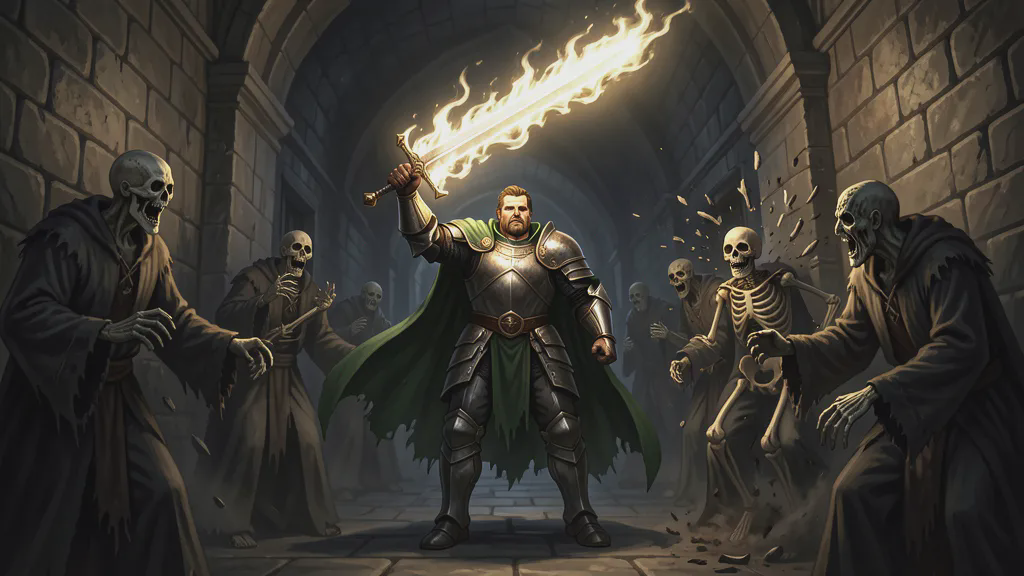
He put the burning sword through a robed zombie and it did not fall down, it came apart, cloth and rot and old bone going up in one bright wash.13 He told the corridor about the boughs of Silvanus landing on it, which he thought was rather good, and the light was strong enough to read by and every dead thing in that hall could see him do it.
His own light guttered out somewhere in there and he did not notice for a while, because the sword was the only light left in the corridor and it was enough. Anister came over and lit a torch off the blade in his hand.
He put another one down before it was over.14
Five minutes. He wants that written down accurately, because it is the only part of this he is going to enjoy remembering, and because it is also the whole of what it bought: the party did not get out, nobody was saved, and the fire went out on schedule like everything else.
Nothing wasted
They started shooting him from the dark after that.
He could not see the archer and never did see him. Arrows kept arriving out of a corridor he had no light for, and the zombies got their arms around him twice, and somewhere in there he stopped being a man holding a line and became a man being taken apart in an orderly fashion.15 He spent a prayer on his own wounds rather than on killing anything, which he would like to say was a hard decision.16
Clarisse went down in the dark, near enough to touch.
He could have turned her over. It takes about as long as it takes -- you get a hand under a shoulder and you roll them and you see what you have got, and sometimes they cough and get up. It would have cost him the only thing he had left to spend that round, and he did the arithmetic, and the arithmetic said that if he stopped to do it the two people still standing would not get out of the corridor.
So he left her lying there.17 A minute later he killed something two paces off her and the bits came down across her face and she did not feel them.
He told the other two to go on without him.
Then three of them reached him at once, in the dark, with nobody near enough to matter, and the last one got through his guard and put him just past the end of himself.18
Just past. Not carved up, not overborne. By as little as it is possible to go down by.
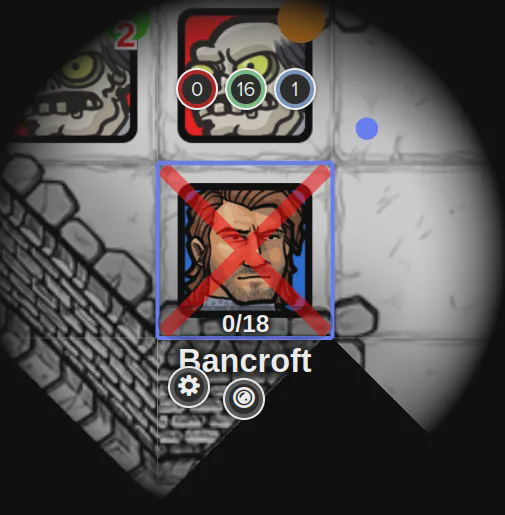
He went down on the stone about forty feet from where Irulan went down, in the same dark, under the same dead, in a dungeon where a man he had bargained with in good faith was already eating the last person this happened to, and where the arrangement he had agreed to that afternoon covers him too, word for word, because he never thought to make it about her specifically.
Nothing is wasted here. He has always believed that. It is a good and true thing to believe on a farm in the sunshine with a dead ox and a field that needs feeding.
Anister and the woman with the rope ladder ran. Last anyone knows they were still running, out of sight, with the dead coming up the corridor behind them at a walk, in no hurry at all.
Nobody has checked to see whether Bancroft gets up.
-
The line is verbatim from the table -- the mongrelman asks, in so many words, "Is she important to you, or is she food?" -- and it is asked before anyone volunteers to go and look. The party is sheltering in the mongrelmen's room after last session's rout, lights doused, with Irulan's fate unknown. Session opens on initiative -- Anister 21, Bancroft 19, Clarisse 11, Irulan 7 -- because the GM starts the night mid-retreat. ↩︎
-
Irulan fell unconscious at the end of last session, so this session opens with her Constitution check to stabilise, needing 12 or higher with a +1. She rolls 6, then 2 (fumble), spends a luck point to try again, and gets 9, then 10. Neither reaches 12. She is dead without ever regaining consciousness, off-screen, in a hall nobody went back to. Her player rolls a replacement immediately: d100 background 81 -- slave, ancestry rolled random and landed on halfling, wizard, level 2 with 2 XP (half the XP of the level-4 character she lost, per the house rule), four hit points, and a talent giving advantage on one known spell. Her spells are Mage Armor, Sleep, Light and Magic Missile; Magic Missile carries advantage inherently, so she takes it on Light. She also rolls a strange rock as a starting curiosity, which becomes the character's defining possession within ten minutes. ↩︎
-
Getting the body back is a negotiation, not a given -- the GM rules the mongrelmen won't move without being talked into it. Clarisse's Charisma check comes up 20, and the deal is struck: they fetch Irulan, the party strips the gear, the mongrelmen keep the remains. Fatty was, in the GM's words, "all in" from the start; the others needed convincing. The body comes back with bite marks already on the shoulder and the GM deliberately leaves the source unattributed. ↩︎
-
Bancroft claims Irulan's yew-branch holy symbol, her chainmail (60gp new, two slots), and her Elvish longsword -- the GM's aside on the last being "you may want an extra longsword, you keep losing yours," which the table lets stand without objection. The rope ladder (four slots) goes to the new wizard because nobody else has the capacity, which later matters: she can't deploy it alone. ↩︎
-
Two separate GM lines, forty minutes apart: "Fatty, quit nibbling on her," and later Bancroft's own "you already ate three toes, dude, I saw you." The bargain was for after the party left. It was not being honoured. ↩︎
-
Anister trades eight iron spikes for a tarnished bowl of shiny rocks, on a Charisma check, having talked himself into believing the mongrelmen are sitting on a dragon's hoard. The GM's framing: "Think of these as hobos in the dungeon." As the party walks off, one of them says "suckers." The bowl is never opened -- Anister asks what's in it at 00:06, after the session has been called. ↩︎
-
Anister's stimulant grants immunity to surprise for 10 rounds (the GM docks it to 9 for dithering). It works exactly as advertised: he is the only party member not surprised when the fight starts, which buys the party nothing at all. ↩︎
-
Clarisse's stealth check comes up 19. The GM rolls 19 for the undead. Ties go to the dungeon. The skeletons move past her -- and one smashes the lantern she'd set on the stairs. She takes a hit shortly after that would have dropped her, and Anister gives her his golden luck token to convert it; it comes back 3 damage instead of a kill. ↩︎
-
Bancroft's Light succeeds -- "Silvanus, we are deep in the shit, and we need your help" -- and reveals that the party is surrounded on all sides. He apologises for that one too, later. ↩︎
-
The tactically significant thing about this fight: the undead push past the front line rather than engaging it, spending two movement and a Strength contest per body to squeeze through Bancroft and Anister and reach the casters behind. They also open doors. The GM states outright that normal skeletons and zombies in this dungeon have never done either, and that "these guys shouldn't be intelligent enough to do this, but they are." All six wear robes. The party concludes mid-fight that they are necromancers rather than ordinary risen dead. ↩︎
-
Turn Undead, natural 1. Bancroft precedes it with the Bastogne story -- the American general who answered a demand for surrender with "NUTS!" -- and then tells the undead to fuck off and die. He spends a luck point on the reroll and it still fails: the level's house rule stacks a -1 per affected undead plus a cumulative -1 per previous attempt, and by this point that's -6, turning a rerolled 8 into a 2. The GM narrates the failure as every undead in the corridor stretching its jaw three times its natural width and screaming to drown out the prayer -- the same mechanic-as-image established last session. He then apologises to Silvanus for the profanity and is told, in effect, that she isn't listening. ↩︎
-
The night's centrepiece, and the payoff for two wasted castings last session. Cleansing Weapon comes up a natural 1 against DC 12. Bancroft spends his golden luck token -- the strongest resource he has, and one earned by writing these reports -- and it converts to a 23, a critical success. The GM rules that the crit doubles the spell's effect for the full duration: 2d6 against undead instead of 1d6, on every attack, for 5 rounds. The prayer is "Silvanus, bring your fire and I shall lay it down upon them," answered with "With righteousness." The GM further rules that the flame is real fire and therefore a light source, which becomes the party's only light when Bancroft's Light spell expires -- Anister lights a torch directly off the burning blade. ↩︎
-
First swing with the burning sword: a hit, then 5 + 7 = 12 and the zombie is destroyed outright. Bancroft's line -- "Blaze, Silvanus. The boughs of your blessings have landed upon this zombie and felled him" -- is immediately misheard by the GM as "bows, as in poop," which is roughly the table's average ratio of gravity to deflation. ↩︎
-
The second kill with the flame, at 23:53: 11 damage, enough to take it off the board. The GM's description has the debris falling across the unconscious Clarisse, "she seems oblivious to it." ↩︎
-
The damage that finishes him arrives mostly from an archer he never locates -- 6 points from an arrow out of the darkness, then 1, then 6 more from a pair of zombie slams, at which point the GM says plainly, "now you're at real risk." Bancroft asks twice which of the visible undead are carrying bows and is told all of them are melee; the shooter is somewhere further back, unseen for the rest of the session. ↩︎
-
Cure Wounds on himself rather than an attack, for 8 points -- "Silvanus, our lives are at stake here. We're down to a very thin branch. Please lend us your aid." It buys him about four more rounds. ↩︎
-
Clarisse drops to an advantage attack from an unseen attacker in the dark. Bancroft is adjacent and the GM offers the option explicitly: turning her over costs an action, and if she's alive she gets her turn immediately. He works it through out loud -- "and if I do that, we all die" -- and declines. Her player's answer, immediately and without rancour: "I don't blame you. I don't blame you at all." ↩︎
-
Three zombies reach Bancroft with nobody else in range. The third connects for 6 -- "only down by one, but it's enough." The screenshot is the map at the moment it happened: his token struck through in red at 0/18, two zombies stacked in the squares directly above him (the near one still at 16), and his light collapsed to a few feet of stone in every direction. The GM had announced he was calling the session at the bottom of the round; Bancroft went down inside that last round, which the table objected to at some length. Both he and Clarisse end the night unconscious, not dead -- the GM's "he's dead" at 00:03 is turn-order shorthand for skipping downed characters, and the survival rolls are explicitly deferred: "if they escape, we'll roll to see if you survived." Anister and the wizard flee under evasion rules. Everyone earns 1 XP, which is not enough for anything. ↩︎