Paid in Teeth
Thrain talked all the way to the maze.
I want that on the record, because it was the first thing wrong, and I noticed it, and I said nothing. In my defense: I am paid to watch for trouble coming at the company from outside. Trouble inside the company is a management problem, and we had management -- in the sense that one of us would later announce, in front of witnesses, that he was the leader. I'll get to him.
I should also say, before any of the rest of it, that I am still owed money. Keep that in mind as you read. It bears on everything.
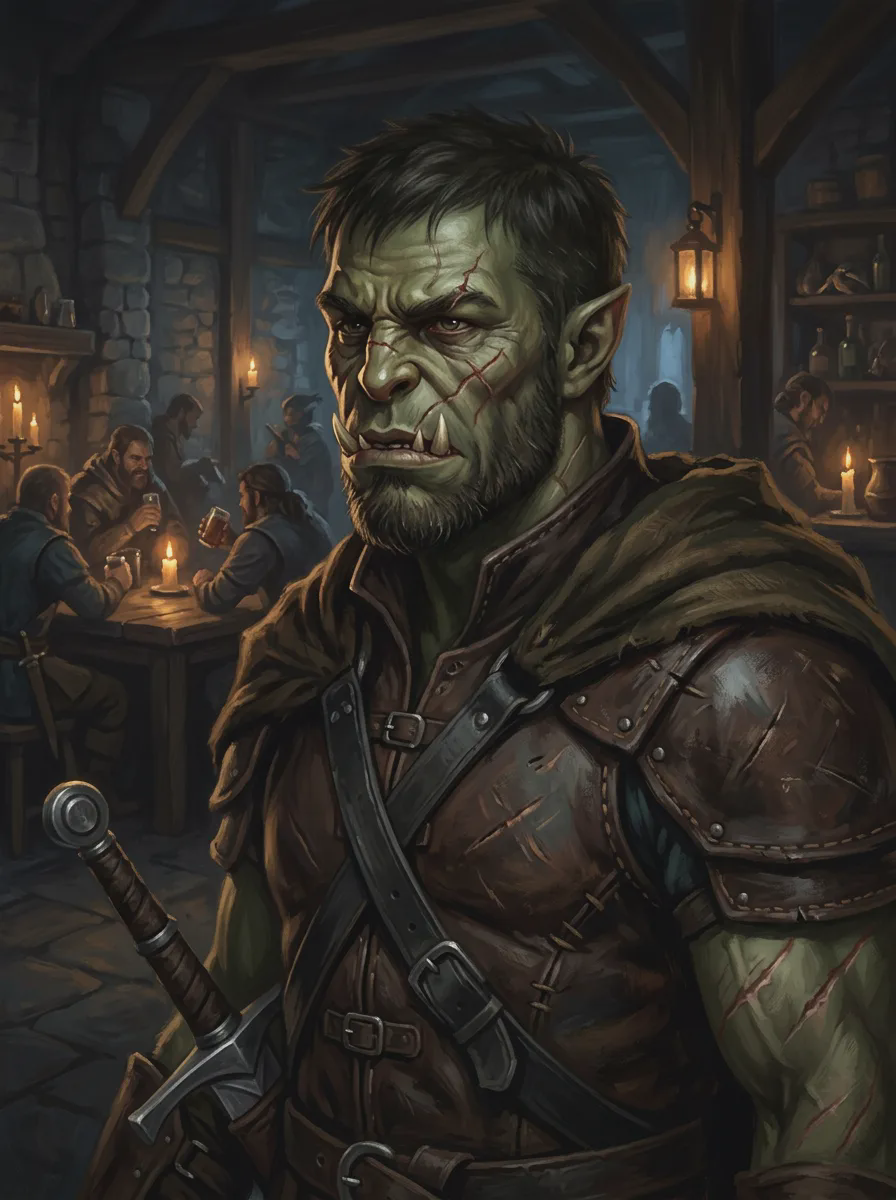
The company calls itself the Dimly Lit, which is the kind of name you get when nobody sober is allowed to vote. We mustered in Helix: Morrigan with the purse, me, and the three from the old crew -- Pippin, Thrain, Caleb. I hadn't seen those three in months. They didn't look good. Grey, mostly. Quiet. Cold to stand next to, the way a wall is cold. Pippin didn't touch his breakfast, and Caleb stared at the table like the table owed him a confession, and none of that was my business. A man who makes the company's health his business ends up unpaid and sad about it. I had already settled for unpaid.
Because here is the arrangement, and I want you to appreciate it: a share of the treasure. That's the pay. Not a wage. A share. Which sounds generous until you've spent a working day in the Barrowmaze and learned what the treasure usually is, which is nothing, divided six ways. I raised the question of a stipend -- something fixed, something a man can drink -- and was told that's not how adventuring companies work. No. Of course not. Working is not how adventuring companies work.
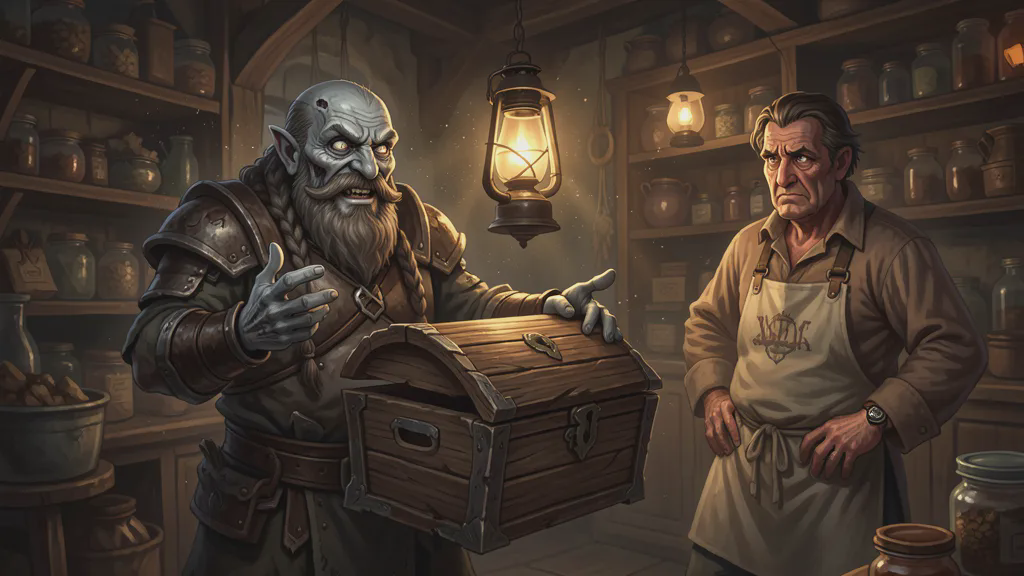
The dwarf, meanwhile, had built a chest.
That was his trade before all this -- chestwright, a man who makes boxes -- and he'd kept the tools, and somewhere in the past months he'd knocked together a chest from kit lumber. We had two box-makers in the company, as it happens; the other one was named for the trade, and I never saw him make so much as a lid. The maze assembles its crews with a sense of humor. The chest, I saw. The lid sat crooked and one hinge was more hopeful than hinged. He knew it too. He hauled it to a merchant who looked at it the way you look at a horse with five legs and offered him half of not much, and then Thrain started talking.
I have stood guard on a lot of doors and heard a lot of men talk their way through them, and I will swear to this: I have never heard anything like it. He was golden. He grieved for the wood. He implied the crookedness was a regional style. By the end the merchant paid full price for a bad box and seemed grateful, and Thrain walked away with a few coins, total, for the finest performance of persuasion I have ever personally witnessed.1 The performance of a lifetime, spent on pocket money.
Since when does Thrain talk? said a voice in my head.
Not your business, I told it, and we went into the maze.
You hear about the room before you smell it, and then you smell it for the rest of your life. Other crews had found it before us -- the room that takes your breath away, they call it, which is barrow humor, and barrow humor is a crime against everyone. Old remains in there. Old enough to have stopped being bodies and started being a condition of the air.
I'm a mercenary. I have smelled battlefields, middens, and a hobgoblin in summer. I kept my feet and my breakfast, which I credit to professional standards.2 Pippin did not. Pippin folded in half and was loudly, comprehensively sick, for longer than I thought he had insides to be sick with. Caleb went a worse color than the one he'd arrived with, which took doing. Thrain leaned on the wall.
And I remember thinking -- not saying, thinking; thinking is free -- that for three men who looked that much like corpses, they were on remarkably bad terms with the smell of them. You'd expect a kind of professional courtesy.
Then came the searching, which is the part of the day where everyone else paws at walls and I do my actual job.
Hours of it. Room after room, Morrigan tapping stones and reading dust like other people read books, Caleb helping in the sense that a dropped torch helps you find the floor. The man searched a doorframe for so long I think the doorframe got uncomfortable.3
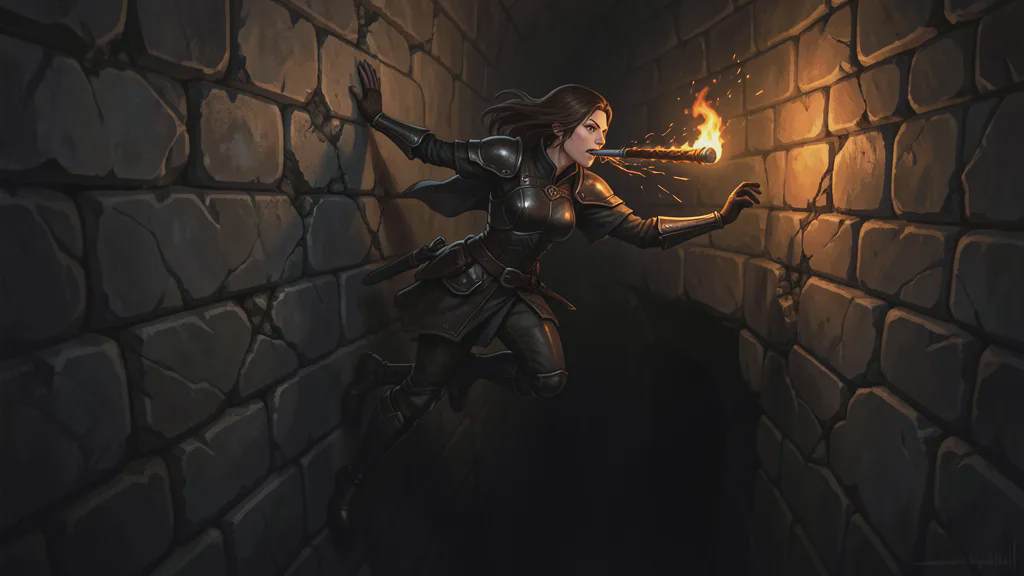
Somewhere in the middle of it the floor opened up -- a pit, ten feet of dark, too wide to jump and no way around except the walls themselves. Morrigan went across the wall. Fingertips and boot-edges on stonework older than every kingdom I've been underpaid in, and her lit torch clenched sideways in her teeth like a diver carries a knife, jaw set, eyes forward, declining to acknowledge that anything about the arrangement was unusual. The light swung with every reach of her arm. I watched from the comfortable side, in my professional capacity as guard. It is the single most competent thing I have ever seen a person do in that maze, and I am including myself.
It was Morrigan who found the thing worth finding too, because it's always Morrigan: a burial niche, set deep in the wall, stonework neater than the room deserved. The kind of neat that means somebody important, and somebody important means goods.
I didn't search. I want that understood. Searching is not in my terms. I am paid -- theoretically, eventually, in shares of nothing -- to stand guard. So while the rest of them breathed dust, I stood at the door with my back to the good wall, and I watched the dark, and the dark paid off better than the company ever has.
I heard them four corridors out. Boots, too many of them, and the low careful voices of men who believe they're being quiet and are wrong. I'll say this plainly, because nobody else will say it for me: I am a lazy man, and lazy men make the best sentries, because we have already found the most comfortable place to stand and we have no intention of leaving it. By the time their light showed in the doorway, our torches were placed, our people were arranged, and Morrigan's knife was somewhere knives shouldn't be able to wait that patiently.4
In they came. Tomb robbers, a working crew of them, and out front a leader with the cleanest boots in the maze and the smile of a man about to explain a fee. Thomas, he called himself.5 I'll give him this much: he was the only other man down there who understood what a wage was. He wasn't there to fight; he was there to be paid for not fighting, which I'd have admired outright if it had been somebody else's purse. He counted us, priced us at a glance the way the merchant had priced Thrain's chest, and started in on the toll speech.
And it was Thrain who answered him. Thrain, who stepped out front of all of us, bowed like a courtier, and said: Good sirs, I am Thrain, and I am known as the leader of this band of the Dimly Lit.
Nobody had elected anybody. I want to be clear about that. We did not have a leader; we had a purse, and Morrigan held it. But the grey dwarf announced himself to a room full of armed strangers as our leader, in front of witnesses, and none of us corrected him, because he had already moved on to the bluff, delivered smooth as church: we've found nothing, friends. The room is empty. Look for yourselves.
The room was not empty. At that exact moment, the room contained Pippin, who can make himself unseen when he wants to, climbing quietly into the burial niche after whatever the important dead were keeping.
And the dead dwarf sold it. The robbers wavered, and Thrain talked -- the chest-merchant voice again, warm and reasonable and utterly false -- and you could watch the greed drain out of Thomas's crew an inch at a time, down from extortion to grumbling, down from grumbling to leaning on their spears.6 A man cold as a cellar selling six strangers on an empty room that had a halfling in the wall of it. I was almost proud. I was mostly tired.
Then the wall screamed.
It was Pippin. One scream, high, short, the kind a body volunteers whether the man agrees to it or not. Then nothing. The niche had not been holding goods. It had been holding something grey and patient that had been waiting in the dark longer than any of us had been alive, and Pippin had climbed directly into it, and Pippin was gone. Not wounded. Gone. The bluff died with him, and the maze ate it along with the halfling.7
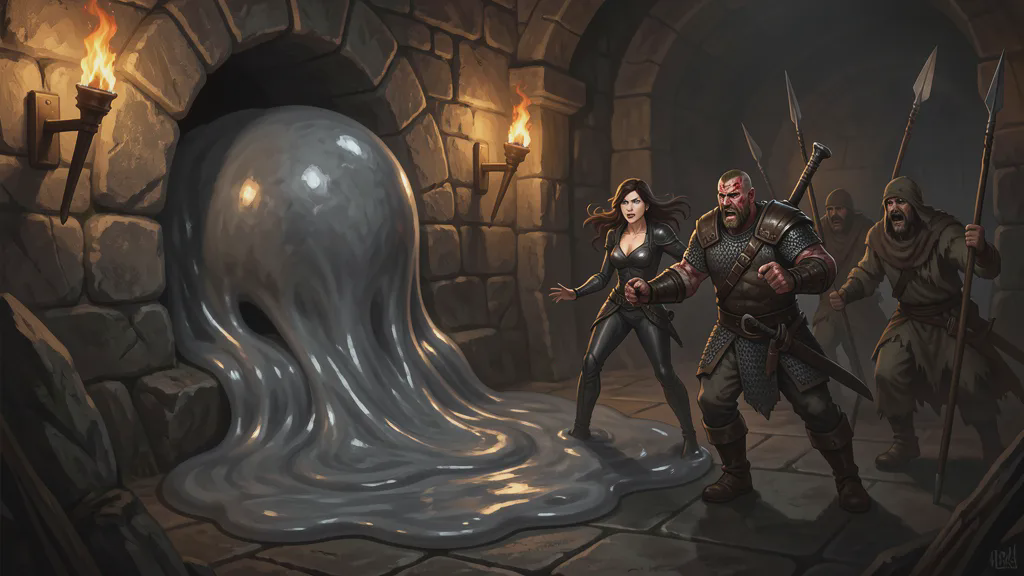
The thing came out of the wall after him. Slow. That's what nobody tells you about the grey ones -- they come on slower than a walking man, and it doesn't matter, because they never stop coming, and everything between them and you stops mattering one piece of furniture at a time.
Slings came out. Stones went in. You could hear them land, a wet sound like hitting a sack of porridge, and the porridge did not care.8 Four of Thomas's crew did the arithmetic and bolted -- the first sensible decision anyone but me had made all day. The rest of us scattered as it picked a direction.
It picked Thrain.
Of course it did. The dwarf had announced himself leader of this band not ten minutes earlier, in front of witnesses, and I heard somebody -- I won't say who, but it was somebody whose plan it was -- shout to lead the thing off after it kills the leader. After. As tactics go you can't fault the economy of it, and the maze, whatever else you say about it, honors a contract. It ran him down in the corridor, mid-stride.
I'll tell you the strange thing, and you'll have noticed I keep a list: the dwarf made no sound at all. Pippin screamed like a kettle. Thrain went under that thing in silence, like a man stepping out of a story that had stopped needing him. Even I expected something. A dwarf is mostly lungs. There was nothing.9 And that was the end of the leadership of the Dimly Lit, total term of office: one bow, one bluff, ten minutes.
What happened to Caleb I had from Thomas afterward, on the road, and I believe him, because no one would invent this to make himself look better.
Caleb -- who lost the staring contest with that doorframe, who once volunteered to climb a statue in a room where statues kill people -- Caleb doubled back. While the rest of us were being chased out of one life and into the next, he went toward the niche, for the goods, and fell in with the four robbers who'd run, and somewhere back there the five of them found the prize the important dead had been keeping.
Teeth. A bag of teeth.
Coin to somebody, I suppose, some time ago, somewhere under the ground. They split it on the spot, a few teeth a man and a fraction over, and Caleb -- Thomas swears to this -- held his up and asked the only question the Barrowmaze has ever honestly answered: do I feel stronger for taking these?
He did not.
The grey thing found them with a torch burning down to the knuckle, a closed door at their backs, and nowhere left that wasn't through it. And Caleb, wisdom of Caleb, handed out firewood. Split his bundle four ways, a torch for every man.10 Somebody opens that door, he told them, and we all run different directions. It's the only way some of us live. For a man with no sense at all, it was nearly arithmetic. Open the door. Scatter. The thing can only follow one.
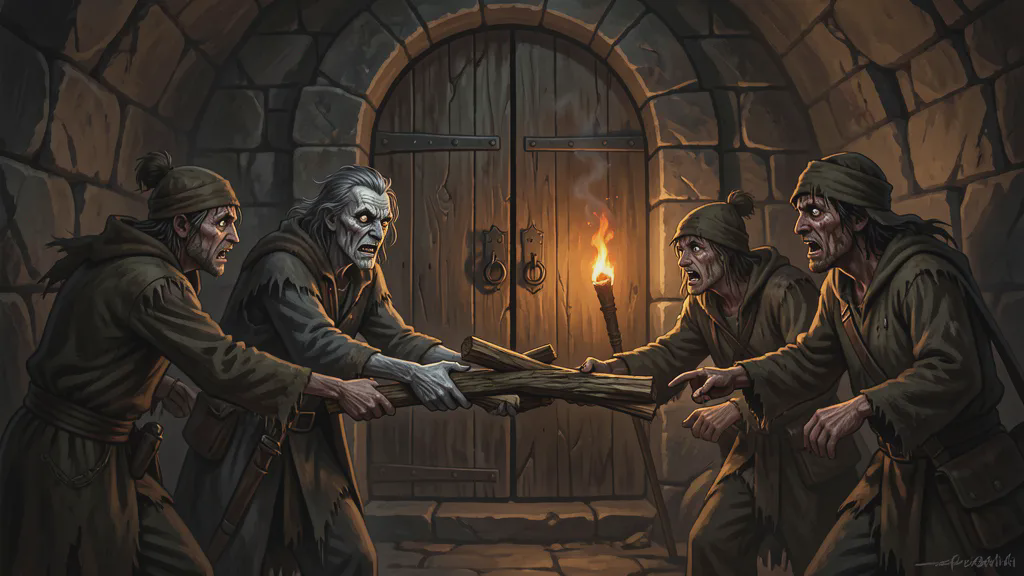
It followed all of them. One at a time, the way it does, patient as rent. It got the robbers and it got Caleb, and the teeth went back into the dark inside the thing that had been guarding them, which is the neatest piece of bookkeeping I've ever seen the maze do.11
Thomas came out alone. Nothing in his hands but the story.
So: the walk home. Four hours of swamp road, three survivors. Me, Morrigan, and a tomb robber who had tried to extort us that same afternoon, walking together in the dark because the dark was full of worse company. Nobody talked much. At some point Thomas said, to no one, that there had to be cleaner ways to get paid, and neither of us laughed, which is as close to sympathy as that road gets. I had the feeling he'd been saying some version of that sentence his whole life, and meaning it less every year.
I raised the matter of shares.
I raised it gently. I observed that the take for the evening had been one bag of teeth, that the teeth were currently inside the monster, and that a share of teeth inside a monster comes to -- and I did the figures twice -- nothing. I observed that this was why a fixed stipend is the only honest wage in this trade. Morrigan let me get all the way through it, and then she bought the drinks when we reached Helix, which is what Morrigan does instead of arguing, and which is also, I notice, not a stipend.
It was over the second drink that I finally did the other arithmetic. The one I'd been not doing all day, because noticing things out loud is searching, and searching isn't in my terms.
I knew those three men. I'd worked with those three men. And I had watched those three men die -- months back, in the statue room, the day the stone lizards came off their pedestal. Caleb fell and didn't get up. Pippin went still with a rope in his hand. Thrain went under stone in the dark. I was there. We walked out past the bodies because the things guarding them were the things that had made them bodies, and nobody ever went back to loot them, and I remember being bothered about the gear more than the men, because the men were past needing anything and the gear was paid for.
And then one day they were just in the tavern again. Grey. Quiet. Cold as walls. Not eating. And every one of us looked at them and decided, privately, the way you decide not to count the purse in front of the man who hands it to you, that it wasn't our business how they'd come back from where we left them. The maze let them walk out. Walk out, or sent them. Nobody asked. Asking is searching.
Tonight it took them back, all three, and I think the books are balanced now in whatever counting-house keeps them down there. They died a long way from where we buried them the first time, if "buried" is the word, if "died" is. Thrain never did say what it was like. He talked all the way to the maze, that dwarf, golden, endless, like a man who'd saved up every word for months in someplace where words don't work.
I should have asked him while I had the chance. But I'm not paid to ask questions either.
I am, in fact, not paid at all. The pay was teeth, and the teeth are in the monster, and the monster is in the maze, and the maze, I notice, is still there. So I'll be going back. Not for the three grey men and not for any sword in any statue's hands.
I am owed.
-
Thrain's craft check barely cleared, so the DM ruled the chest low quality -- nominal value 8 gold, standard merchant offer half that at 4. His negotiation came up a natural crit (23 with his bonus) and talked the price up to the full 8 gold. A magnificent roll spent on four gold of margin. One more thing worth knowing about the negotiator: Thrain Ironbound is dead. He was crushed by animated lizardman statues in the statue room three months before this session, on the Monday game's last night. ↩︎
-
The stench room forced Constitution checks across the band: Vrak passed clean with a 20; Pippin rolled a natural 1 and was violently ill; Caleb (4) and Thrain (8) both failed. A later pass through the bad air went the other way -- Pippin and Morrigan both rolled natural crits, Caleb managed a crit and a fumble on the same check, and Thrain found the other natural 1. Pippin Peppercorn, for the record, is also dead -- a stone claw across the chest, same room, same night as Thrain. That's two of the party so far. ↩︎
-
The long middle of the session was waves of group Wisdom checks for traps and treasure. Caleb checks at -3, owing to a wisdom of 5. Morrigan's crit mid-session is the find that mattered: the burial niche. And yes -- Caleb Chestwright died that same Monday too, first of the three, falling from the statue he had volunteered to climb and cracking his head on a lizardman's tooth. All three of tonight's old crew were, at this point in the evening, already dead. Nobody at the table had noticed yet. ↩︎
-
Vrak's Wisdom check to detect the approaching tomb robbers came up double natural crit -- both dice 18 -- from a character whose wisdom score is a 5 or a 6, depending on which of those is his charisma. The watchman earned his theoretical wages. ↩︎
-
Thomas is the grown-up version of the street urchin the OSR Realms party hired in Threshold -- the kid who founded the Ice Skulls, his own "tribe of urban barbarians," and ran a crew of fellow urchins on the party's coin. Twenty-odd years on, he is still leading a crew, still putting himself first, and still getting paid for it more reliably than anyone around him. ↩︎
-
Thrain's Charisma check (14 with his +3) held the "this room is empty" bluff and talked Thomas's crew down from extortion while Pippin was actively looting the niche behind them. The Tomb Robber Leader and Tomb Robbers rolled initiative (13 and 16) but the fight never properly started -- the ooze started it for everyone. The bluff, note, was run by a dead man: whatever walked back out of the maze wearing Thrain can apparently still sell anything to anyone. ↩︎
-
The gray ooze's tentacle attack on Pippin came up 22, 22 -- two crits in a single round -- killing him outright inside the niche. Table verdict: death screams are involuntary, even invisible ones. Pippin Peppercorn's second recorded death; see the death toll. ↩︎
-
The sling volley against the ooze rolled 11, 14, 1, 8 -- mostly misses, no visible effect on the thing. ↩︎
-
Thrain fell when the ooze ran him down in the corridor during the scatter from the niche room. His second death as well -- and the quiet going may be the closest thing to a tell the table got all night. ↩︎
-
Caleb's Wisdom check at -3 on whether he'd care who got a torch: he rolled a 14 and cared. The 20 pounds of firewood split four ways at roughly 4 pounds a man is straight from the table. ↩︎
-
The ooze's tentacle crit again (22) in the final exchange; Caleb and the four fled robbers died behind the opened door. Survivors of the night: Vrak, Morrigan, and Thomas. Out of game: Pippin, Thrain, and Caleb had genuinely died on the Monday game's final session -- their sheets were kept only because the bodies were never looted, and when the Monday characters were brought into the Tuesday slot, nobody remembered. The table's ruling, on discovering the oversight: they were never resurrected by anyone. They came back themselves, somehow, in the Barrowmaze -- and tonight it reclaimed them. ↩︎