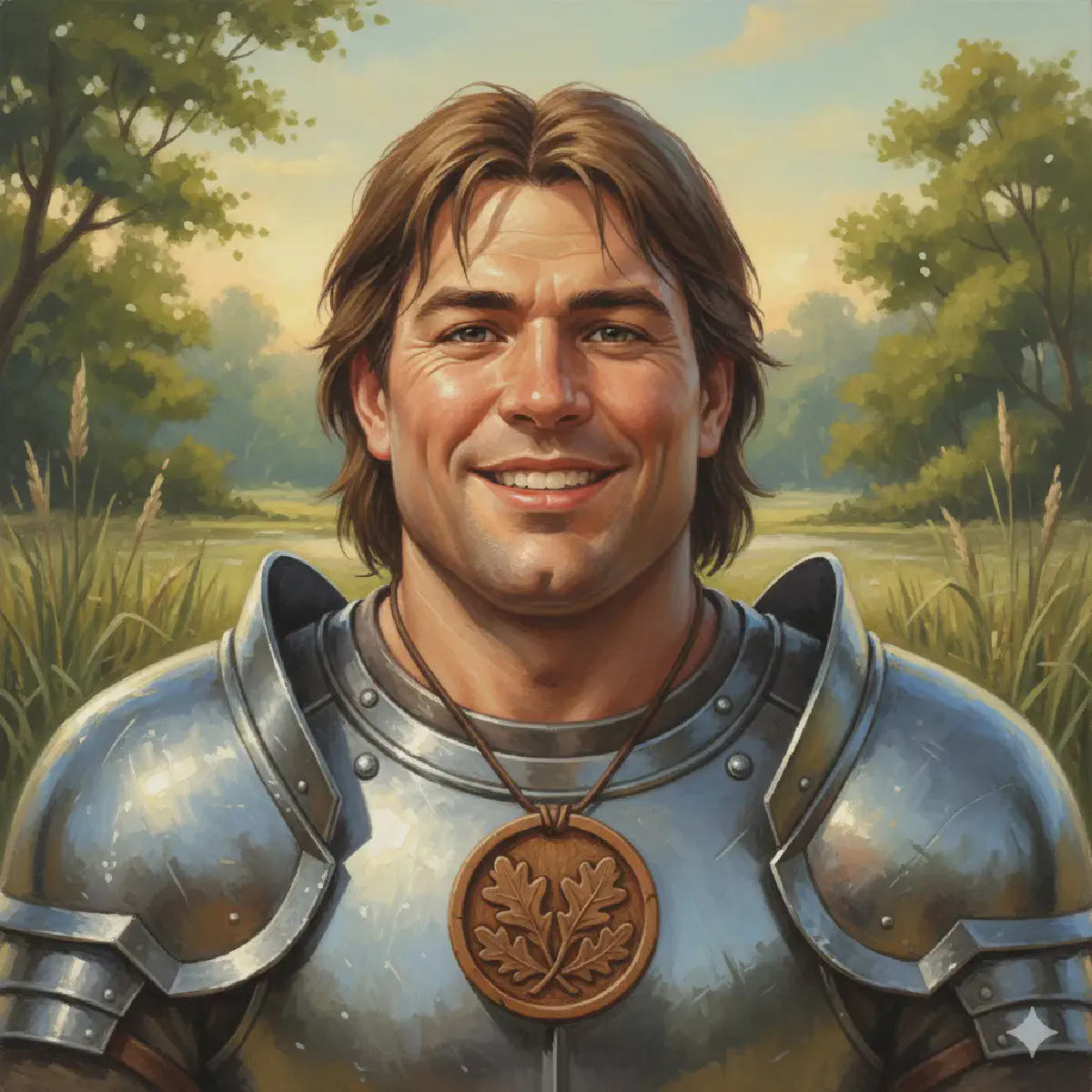
The last twenty minutes of the dig went like the first three hours had gone, which was to say it went slow and steady and without anyone dying. Bancroft worked the trench with Irulan. Anister kept the watch above. Clarice was not with them today. The note she had left in the morning had only said gone south, back in a week or two, and the part of Bancroft that liked to know things had asked Bolo whether he knew more, and Bolo had shaken his head with the careful look of a man who knew exactly what he was not telling, and Bancroft had let the matter drop. People came and went on the moor. You did not pry.
“You’re senior,” Bancroft told Anister, when the rolls were done and the day’s leader had been chosen the way the day’s leader was always chosen now – by who could move quickest if the moor took a sudden notion. They had tied. Anister had moved a hair faster.
“Everything is my fault,” Anister had said, which was the thing he always said when it fell to him. He had said it once, in a booth at the Strumpet, six or seven sessions ago, and the joke had stuck the way certain jokes will when they happen to also be true. “Bancroft, if I have to step out for parenting duty, you are sworn in as vice.”
“Sworn in to what?”
“To leadership. Everyone repeat after me. I, Bancroft Barleychaser, do solemnly accept –”
“Yes, fine, I accept.”
“You did not say the words.”
“I accepted. That’s the same thing.”
“It is not. But we are on a moor and I will allow it.”
It was a smaller chamber than Bancroft had been expecting. One room. Stone-cut, not very deep. A single sarcophagus in the middle of the floor.
The sarcophagus was the part that gave him pause. It was not the rough granite of the other barrows. It was a darker stone, polished, almost glassy under the light of Anister’s torch – a stone like the inside of a deep pool, with little flecks of paler grain in it that caught the light and threw it back. He had seen marble once or twice in his life. He had never owned anything made of it. This was finer than marble. He could see his own reflection in it, smeared and dim, looking back at him out of the slab.
Above where the keyhole was – and there was a keyhole, plain and round and rimmed in iron – there was a small carved insignia in the stone. A scarab beetle. About the size of a thumbprint. Carved very neatly.
“Huh,” Anister said.
“Huh,” Bancroft agreed.

A polished black marble sarcophagus stands in the middle of a small barrow chamber, lit by Anister's torch. Above the central keyhole is a small carved scarab insignia. Bancroft and Irulan stand in plate at one end; Anister at the other with the torch held high. The chamber is otherwise empty.
“Of course it’s not,” Bancroft said. “That would be too easy.”
Anister offered the leather off his belt, which was a thing they had done before – you put a scrap of soft leather between the chisel and the stone, to dampen the ring, in case the ring carried farther than you liked. Irulan took the sledgehammer. She lined the chisel. She put her shoulder into a swing that would have cracked a millstone, and she brought the hammer down with her whole back behind it.
The chisel rang. It rang like a tuning fork that someone had struck on purpose to teach a child the note. The ring went up Bancroft’s arm and into the back of his teeth. He could feel it in the iron rivets of his plate.
The slab was unmarked. There was not even a chip of stone on the floor. The chisel had not bitten. Irulan, panting, lowered the sledgehammer slowly and looked at the slab as though it had insulted her.
“It didn’t scratch,” she said.
“No,” Anister said. He had his hand flat on the slab, near where the scarab was. “I don’t think this opens for hammers.”
“Right key, right hand,” Bancroft said. He surprised himself with the certainty in it. He had a farmer’s view of locks – if a lock was on a thing, the thing had been put there by someone who had a key, and if you wanted what was inside, you went and found the man who had the key. You did not break the door. Breaking the door was for armies. Armies had more men than locks. Three of them, in a small room under a moor, were not an army.
“We could keep at it,” Anister said.
“We could. But that thing is not going to give. Look at it.” Bancroft tapped the slab himself, lightly, with the back of one knuckle. The stone did not even sound like stone. It sounded the way a struck bell sounded when the bell was cast in something that had never been a bell. “Magic. It’s magic stone. We can hit it all day.”
“So what, then?”
“We find the key,” Bancroft said.
Anister exhaled through his nose. “All right,” he said, in the slow way he said things when he was conceding a thing he would rather not concede. “All right. We close this back up, and we go ask.”
The Rosie Quartz was on the corner of the high street, two doors up from the Strumpet, and they did not normally go in it. Bancroft did not have the kind of money that the Rosie Quartz catered to. The sign over the door said – in letters small enough that you had to be at the door to read them – Harold Hugh Reginald, jeweler, moneylender, and purveyor of ancient antiquities. The man under the sign was a halfling, no taller than Bancroft’s hip, with a head of brown curls and a smile that started somewhere and ended somewhere else and seemed to take up the whole space in between.
“HHR,” he said, when they came in. “Huff and Puff, jeweler, moneylender, and purveyor of ancient antiquities. How may I be of service?”
“Keys,” Anister said.
HHR’s eyebrows went up. They were thick eyebrows, given how small the rest of him was. “Keys,” he said. “Yes. I have a key. Allow me.”
He brought it out from somewhere under the counter – a long fussed-looking thing of iron and silver, with rubies and small diamonds set in the bow of it where the fingers would grip. He laid it on a square of red velvet. He smiled at it the way a man smiled at a thing he had owned for a long time and never sold.
“One hundred gold,” he said. “A bargain.”
Bancroft looked at it for a long beat. He did not have a hundred gold. He was not sure he had ever had a hundred gold all at once.
“It’s not the right shape,” he said.
“You have a particular shape in mind?”
“A scarab,” Anister said. “Or a key with a scarab on it. Anything with a scarab.”
“Ah.” HHR drummed his fingers on the velvet. “I have scarabs. I do not have a key with a scarab. But I have scarabs. May I show you?”
He brought out two from a tray in the back – a smaller one, gold and silver, perhaps an inch high; a larger one, two inches, in something pale and pearled that caught the light in milky bands. Both had pins on the back. They were brooches.
“Lovely things,” HHR said. “Sold from estates of the noble women of Ironguard Mott. The small one is fifty gold. The large is two hundred. There are three more on consignment at my sister’s shop in the Mott, but I cannot say whether they are still available – noblewomen are fickle, and a nobleman who has bought back his wife’s brooch out of pride is not a creature anyone can predict.”
Bancroft turned each one gently. There were no moving parts. There was no place a key would emerge from. They were brooches and only brooches. He set them back on the velvet.
“They’re beautiful,” he said. “They’re not what I’m looking for.”
“Few things in this life are what we are looking for,” HHR said agreeably. “But you are a man who looks. I respect that. Tell me what shape your shape is.”
“A keyhole shape,” Anister said. “Iron. Round. With a scarab carved in the stone above it.”
“Mm.” HHR’s smile did not flicker. “I shall ask after it. Where may I find you, when I find you a thing? – yes, of course.”
“Brazen Strumpet,” Anister said. “Room eight. Anister Gallient.”
HHR nodded, as if filing it. He looked at Bancroft – a long even look that took in the plate, the symbol of Sylvanus on the chest, the boots that had been cobbled twice – and his eyes flickered with a quick honest amusement.
“You I know,” he said. “You I have done business with before. Through certain… intermediaries. Gems. Jewelries. From the barrows, I should imagine.”
“You should not imagine anything,” Bancroft said politely.
“No,” HHR agreed, in the same agreeable tone. “I should not. I do not. There is a reason Helix exists, sir, and it is not the scenic beauty.” He waved one small hand at the window. The window showed the swamp moor sloping away to the south, brown and grey, under a sky the color of an old saucepan. “It is what comes out of the ground. And what comes out of the ground passes, in due course, through here. I do not ask. I do not need to ask. I have built a small contentment on not asking. Pass me a key with a scarab, if you find one, and we shall make a profitable arrangement.”
“Fair,” Anister said.
“Fair,” HHR agreed.
Outside, walking back to the Strumpet, Anister said, “He is not on our side.”
“He is not on anyone’s side. He is on the side of his own coin. That is its own kind of honesty.”
“You like him.”
“I do not like him. I respect him. The two are different.”
They spent the night at the Strumpet. Bolo’s stew was, as ever, more of a concept than a meal. Bancroft sat in his usual booth by the window and watched the high street and thought about scarabs. He thought, too, about Clarice. He hoped she was well, wherever south was. He said a small private word to Sylvanus on her behalf and did not say it aloud, because it would have embarrassed Anister.
In the morning they ate, and they paid, and they went to the Grey Company mercenary guild.
The man who answered to the inquiry was a human, leather-armored, a spear in one hand and a dagger on the belt, a helmet under his arm that he held the way a man held a hat in a place where hats were expected to come off. He was younger than Bancroft. He was older than Bancroft would have liked. He had teeth.
“Sparrow?” Anister said.
“Willow,” the man said. “Willow. Two gold a day. Finest man-at-arms you could have.”
“Hopefully you’re flexible and strong,” Anister said.
“I thought we were adventuring, sir.”
Anister liked him at once. Bancroft could see it in the small smile that came onto the side of Anister’s mouth when Willow had said the line. Anister was a man for whom a quick reply paid most of the rent of a person’s first impression.
“We need you to carry this,” Anister said, and pointed at the rope ladder.
Willow looked at the rope ladder. The eagerness went out of him in a slow visible exhale.
“Oh,” he said.
“It’s the finest rope ladder you have ever seen,” Anister said.
“It is, in fact, the finest rope ladder I have ever seen,” Willow said. “I will carry your fine rope ladder.”
The rope ladder had taken Anister most of the previous evening and into the morning. It was a tumbler’s piece of work – knots like nothing Bancroft had ever tied in his life, the kind of knots that pulled tighter when you stood on them and looser when you wanted them loose. Two ropes’ worth of length. Forty feet. Heavy, in a coiled way that did not seem heavy until you tried to walk a hundred yards with it on your shoulder.
It was for the pit, of course. The pit was the way down into the deep dungeon under the moor – the place they had not been to in months, the place where Bancroft, the first time he had ever gone down it, had gotten cozy with a spider on the wall (Anister’s words, and Bancroft would carry the words to his grave) and had been chased from corridor to corridor by something that ran on too many legs and had not, by the grace of Sylvanus, eaten him.
They had decided to go back to the deep dungeon, because the surface barrows had been telling them, in the patient way the moor had of telling things, that they had been looking in the wrong place.
The walk to the pit went without incident. Willow carried the rope ladder without complaint. Bancroft tried two or three times to draw him out – where was he from, what had he done before the Grey Company, did he have family – and Willow gave the kind of answers a man gave who had told them many times before, and Bancroft did not press. There was a kind of hireling who lasted a season and was gone; there was a kind of hireling who became a friend; you did not know which kind was which on the first day, and pressing made the wrong kind disappear.
At the pit they tied off the ladder to one of the old pillars at the rim – Anister’s rope did the tying, lashed twice and triple-knotted, and a spike driven into a crack as a second hold – and lowered the ladder down into the dark. Forty feet was a long way to look down. Bancroft, who did not love heights, did not love the look down.
“Anister first,” he said. “You built it. You test it.”
“That’s just,” Anister said, “and I accept it.”
He went down first with the torch held in his teeth. He went the way Anister always did the climbing-things – not fast, but in a way that made it look as though anyone could do it, which was the trick of the trade. Bancroft followed, more slowly, with Willow above him on the lip of the pit and Irulan behind Willow. They all got down. The ladder held.
At the bottom Bancroft straightened his back and looked at the corridor he had been chased down nine months ago, and the corridor looked the same. The torchlight smelled the same. The dust smelled the same. He had not missed the smell.
“All right,” he said. “Where to.”
“North first, I think,” Anister said. “There were doors up here last time we didn’t open.”
There was a door, in fact, north – closed, with a disabled floor trap visible in front of it, a flagstone that someone had once pried up and then put back unstrung. They stepped around the disabled trap. Anister opened the door.
The room beyond was empty. A dead end. A dusting of rubble in the corners. They searched it for twenty minutes, in case the moor was hiding something in the corners that it had hid the last fifteen times, and the moor was not hiding anything in the corners.
“South,” Bancroft said. They went south.
There was a door with a knobbed iron handle, which Bancroft did not remember from the last time but which he had not, in fairness, been paying close attention the last time, on account of the spider. He opened it.
The room beyond was larger. It was strewn – and this was Anister’s word, applied carefully – with debris. Not corpses. Not yet. Just broken things: chunks of stone, the dry brown remnants of what might once have been a wooden chest, a long curve of rotted leather that might have been a strap or a belt or a strangling cord, depending on what your mind wanted to do with it. The walls were stone. The floor was stone. There was a corpse in one corner, eyes gouged, a long-ago thing, with the black tatters of a robe still hanging off the ribs.
“Just a second,” Anister said. He brought out a small green-glass vial – one of the herbalist’s brews he kept in the inside pocket of his jerkin – and he unstoppered it, and he sniffed it sharp and short the way a man took a thing he was going to need to be quick for. His eyes went very wide. He blinked a number of times. He squared his shoulders.
“Stimulant,” he said. “Means I won’t be surprised.”
“How long?”
“Until I run it out. Don’t waste me. I’m on the clock.”
There was a door at the far end of the room. There was an open passage south of it. Bancroft, who was leading because he had the plate and the longsword and the elvish steel, went to the door first. He set his hand on the handle.
“Ready,” he said.
He opened it.
They were waiting for him on the other side, the way the dead always seemed to be waiting – not in ambush, exactly, just waiting, the way a thing waited when it had no plans and no calendar and nothing better to do than stand in a dark room and breathe through teeth that were no longer attached. There were four of them. Zombies, not skeletons – still some grey rotting meat on the bones, eye sockets full and dark. Bancroft, in the half-second before he knew what to do, smelled them, and the smell was the same wet stale smell that had come off the toad’s mouth on the day of Lulldun, and he knew them by smell before he knew them by sight.
He had the holy symbol off his chest before the door was all the way open. He held it up. He said it the way he had said it the day in the crypt with the five zombies – not loud, just plain:
Sylvanus. Be gone.
The green light came off the holy symbol. The dead in the room saw it. The dead in the room did not care. He felt, in a way he had only ever felt once before, the refusal of the thing – the way a stone refused water, the way a wall refused a pickaxe. The light went out around the edges. The zombies came on.
The third zombie, the one nearest the door, did something with the bones of its face that was not exactly a sneer, because a face with most of its lips gone could not exactly sneer, but it was something the dead could only have done deliberately. Bancroft would not, afterward, remember what the gesture had been. He would only remember that it had been rude.
That’s a first, he thought, putting the holy symbol back. That’s the first time you didn’t answer.
He did not have time to think about it more.
Willow came in past her – past her, which was the thing that Bancroft would remember about Willow afterward, that he had not waited to be told, and that he had moved like a man who actually liked his work – and he put the spear in under the bloody collar that Irulan had opened, and he twisted, and the zombie came apart in two pieces at the waist and went down in a wet pile.
“Number one zombie killer,” Willow said, in a small private voice that was just for himself. “Of my old company.”
Bancroft would, later, find out that Willow had served two years in the militia of some village two valleys north and that number one zombie killer of my old company meant something between two and four, depending on how generously one counted. He did not yet know that. He knew only the way the second part was said, which was number one, and that the boy had moved like he meant it, and that was all he needed.
Bancroft brought the elvish longsword across. The cut went into the third zombie’s flank and did not, this time, do what the elvish longsword usually did, which was take something off in one. It only grazed. He felt the metal jar in his hand, and he felt his footing go a half-step wrong, and he thought, I am tired. I am tired and I am not as good today as I usually am.
The zombie staggered but did not fall.
He stepped back. He needed light at the back of the room, because there was a fourth zombie shuffling out of the deeper dark and he could not see it well enough to read its hands. He raised the holy symbol again. He spoke the word he had been taught at the temple as a boy – a small word, a candle of a word, the kind of prayer that lit a peasant’s barn for a man working a calf out of a cow in the dark.
Nothing.
Not even the green flicker. Not even a glow at his fingertips. He felt the word leave him and he felt it fail to land, and there was a moment in which he could feel the absence of Sylvanus the way a man feels the absence of a watchman who is supposed to be on the corner and is not.
He tried again. He had heard, somewhere, that you tried again. He put the word out a second time – harder this time, the inside of his head a little tighter – and the second time the word also did not land.
He stopped trying. Later, he thought. Later we are going to have a word, you and I. Not now.
The zombie that Bancroft had grazed turned, decided he was too much, and went past him at Anister. Anister, who had been backing toward the door with the bow up, saw it too late. The slam came in low and tore a long shallow strip down Anister’s forearm. Anister made the small sound he made when a thing surprised him, which was the word asshole delivered with great dwarvish dignity in the back of his throat.
“You’re scratched,” Bancroft said.
“It’s worse than scratched,” Anister said. “These ones leave a mark.”
It was over. The room was quiet. Bancroft, who was bleeding under the plate and could feel the wet of it down his side, sat down on a chunk of fallen stone and breathed.
“Willow,” he said, after a moment.
“Sir.”
“That was well done.”
“Two of them,” Willow said, almost shyly. “I got two.” He had not, in fact, gotten two, but Bancroft did not feel like correcting him. He had only gotten one, but he had gotten the first one, and the first one was the one that made the rest of them possible. Bancroft, in his head, gave him the credit for two and a half.

The door bursts open into a stone chamber strewn with debris and a corpse in robes; four shuffling zombies advance through dust and torchlight. Bancroft in shining plate stands at the threshold with the elvish longsword raised, Irulan beside him with a longsword, Anister behind with longbow drawn, and Willow the young hireling lunging forward with his spear, a small fierce grin on his face.
Anister tried to brew a curative. He carried the makings of one in a small leather pouch at his hip, and he could, on a good day, put a healing of sorts into a man with a paste of herbs and water and what he called intention, though Bancroft suspected the intention was the part he had paid the most for at the herbalist in Helix. He worked the paste between his palms. He set it on a strip of linen. He frowned.
“Just shy,” he said. “It’s not going to take.”
He held the strip of linen out to Irulan anyway. Irulan, who had taken nothing more than a bruise across the ribs from the second zombie, sniffed at it politely, and shook her head, and Anister wrapped it in the linen and dropped it into a corner of the room where it would rot in its own time. It was a thing he did. The herbs did not always work. The herbs that did not work did not become any more useful for keeping.
He did Irulan next. There was a bruise across her ribs that was going purple already; he laid his hand over the breastplate where the bruise was and prayed it small. Then he did himself – which he had never quite gotten used to doing, because a healing for yourself felt to him like a man taking the first portion at his own table – and the cut under his plate stopped bleeding, and the ache went out of the ribs, and he sat for another long beat in the silence and thought about the Light spell.
The Light spell had not gone. Twice. Twice in a row.
Cure Wounds had gone twice, easily.
He did not know what that meant. He did not, in that moment, want to know.
The next door was south. There was a passage past the bodies of the zombies, a long narrow corridor that ran down into a wider area, and at the far end of the passage was another door, this one half open. Bancroft, who was now leading because Anister was conserving the stimulant, walked toward the half-open door.
He smelled it before he saw it.
The smell came out of the half-open door the way a smell came out of a slaughterhouse in summer – but worse than that, because a slaughterhouse smelled of one dead thing at a time, and this smelled of dead things that had been left to be dead in each other’s company, and to become something more than just dead. Bancroft, who had grown up on a farm and had thought he knew every bad smell a body could make, found out that he did not. His stomach turned. He clamped his mouth shut, and he breathed through his teeth, and he was, narrowly, not sick on the floor.
Anister, behind him, was not so lucky. There was a hard fast retching sound. Then a wet one. Then another one. Anister went down on one knee. He stayed there for the better part of a minute, retching at the wall, while the rest of them stood in the corridor and tried not to breathe.
“Close it,” Anister said, in between heaves. “Close the door.”
Bancroft closed the door. The smell did not fully go, because the smell had got into the corridor now and was not going anywhere, but it lessened enough that Anister could finish bringing up his breakfast in peace.
“I am sorry,” Anister said, when the heaving had stopped. He spat. He wiped his mouth on the back of his glove. “I am sorry. That is the worst thing I have ever smelled.”
“It’s not the worst thing I’ve ever smelled,” Bancroft said. “But it’s close.”
“What is in there?”
“Something dead. Not a small something.”
“We have to go in there.”
“I know.”
They jury-rigged masks. Bancroft had a burlap sack in his pack – the kind of sack a farmer kept for everything, oats and onions and once, memorably, a piglet on the way to the market – and he tore it into two long strips. The cloth was rough. It was thick enough to filter, a little. It was not going to be enough on its own. But it would be enough with held breath, and with the will to keep going.
He offered one to Irulan. She took it. He kept the other for himself.
“It’s bad,” Bancroft warned her.
“My mother’s cooking was bad,” Irulan said, tying the strip around her mouth and nose. “If I survived that, I’ll survive this.”
“Willow,” Bancroft said. “You stay at the door.”
Willow, who had been looking at the doorway the way a man looked at a thing he was glad he had not been ordered into, did not argue.
“Sir.”
“Guard the way we came. If we yell, you come. If we don’t come back in two hours, you come for us. Otherwise you hold the door.”
“Sir.”
It was a kindness, and Bancroft did not say so. Willow took it the way a young man took a kindness he had not earned yet but was going to: with a small straightening of the back, and a tightening of both hands on the spear, and a glance at the door that said he was going to do the small job he had been given as though it were the large one.
Anister, who had recovered, took his stimulant again – he had not burned much of the first dose, in the end, between the smell and the vomiting – and squared up and made himself ready. Bancroft drew the elvish longsword. Irulan tightened the mask. They stepped through the door.
The room was a columbarium.
Bancroft did not have a word, at the time, for what he was seeing. He learned the word later, from a priest in Helix who had been to a temple in a southern country. What the room was was the same thing that the room did: it stored the burnt remains of the dead, in clay jars, in stacked alcoves cut into the walls, hundreds of jars, going up twenty feet to the ceiling and back along the wall as far as the torchlight reached. Each jar was sealed with wax. Each jar was the size of a small loaf of bread. There were hundreds.
In the back of the room, where the floor turned down toward a deeper alcove, there were two bodies.
The two bodies had not been the source of the smell. The smell came off them, but the smell had come from somewhere else too – from the urns, from the dust, from something in the air that the room had been making for years. But the two bodies were what the eye found, because they were what the eye was meant to find. They were two men. They had been adventurers. They were impaled on rusted spears – one through the chest, one through the gut – and the spears were driven into the wall behind them, and the bodies had been there a long time. Most of them had been eaten.
One of them had a backpack.

A subterranean columbarium with stacked alcoves of clay funerary urns rising twenty feet to the ceiling. In the foreground Anister hunches retching against a pillar; Irulan stands with a burlap cloth tied around her nose and mouth, her shield held tight, peering toward the back. In the deeper shadow at the rear of the room two long-dead adventurers are impaled on rusted spears against the wall, half-eaten, the source of part of the smell. Torchlight is dim and yellow.
“Sylvanus,” Bancroft said quietly. He did not finish the prayer. He did not have a prayer for it. He just said the name.
Bancroft went to the bodies. He did not look at them more than he had to. He got the backpack off the impaled man – it took some pulling, because the strap was crusted into the shoulder – and he opened it, and he looked, and he did not speak. He handed it across to Irulan without a word. Irulan slung it over her own shoulder. Two hundred silver. Thirty gold. It was a fortune, in the way the moor made fortunes – on the backs of the unlucky.
“They had ropes,” Anister said quietly, beside Bancroft. “Look. They had everything we have. They had bows.”
“I see.”
“How long do you think?”
“A year. Maybe two. The flesh would tell, but it’s been picked too clean.”
“Sylvanus,” Anister said, “did not protect them.”
“Sylvanus does not promise to protect anyone,” Bancroft said. “Sylvanus promises to be there. That is a different thing.”
The urns, they checked. They had to. They were going to be checked by someone in any case, eventually, and Bancroft would rather it be them than someone else who might do worse with the takings.
Bancroft did the shaking. He went jar by jar through the lower rows, sliding each urn out of its alcove with both hands, giving it one slow careful shake the way a man checked for a seed in a dried gourd, putting it back if nothing rattled inside. Irulan did the same on the row above him. They did this for an hour. The shaking sound was very small, in the room with the smell and the bodies. Anister kept the watch and worked the corners, his dwarvish eye on the seams of the stone.
Every urn had cremated remains in it. Every one. Bone dust and ash and nothing more. There were people in these urns – hundreds of people, going back generations – and there was not one trinket among them. The dead, in this place, had not been buried with anything.
It was, Bancroft thought, more honest than most burials he had ever seen.
Irulan went up the alcoves for the top rows. She climbed the way you climbed a stone bookshelf, hand over hand, one foot on a lower lip and the other reaching, and somewhere about three-quarters of the way up her hand slipped on dust and she came down on a lower alcove harder than she meant to. She held on. She did not fall. But she gave a sharp small grunt, and Bancroft saw her face change in the way it changed when she had decided, in some private place, that the day had used up its margin of forgiveness on her.
“You all right?”
“Wrenched it,” she said. “I’m fine.”
She finished the top row anyway. Nothing.
On the bottom row, half-buried behind a row of urns that had been pushed in front of it for someone’s reason, Irulan found something. She called Bancroft over without raising her voice. Bancroft came. She had her hand flat against the stone, the way Anister had had his hand on the sarcophagus that morning, and she pointed – silently – at a vertical seam in the wall that was not, when you looked at it, the kind of seam a wall ought to have.
“A door.”
“A door,” she agreed.
She pointed at the floor, too. There were tracks. Bancroft looked at them. He had grown up on a farm; he knew tracks. He knew dog and he knew sheep and he knew the small forked prints of a deer in soft mud. These were not any of those. There were too many kinds. He saw a cloven hoof, like a goat’s. He saw a flat soft pad, like a cat’s. He saw a print that did not look like a foot at all, and he had no name for what had made it. There was a long wavy line through the dust like a tail. Maybe a tentacle.
“Mongrel-men,” Anister said softly, from behind them. “I’ve heard of these. They’re a kind of – you don’t want to know what they’re a kind of. They eat what they kill. They drag bodies here. This is their pantry.”
“That is grim,” Bancroft said.
“It is.”
“Are we going through the door?”
“Not today. Not in this smell. Not with Willow on the floor.”
“Tomorrow.”
“Tomorrow.”
He did not know it, at the time. There was no flash of light. There was no thunder. There was only – somewhere in him, an hour or two later, on the climb back out of the urn room – a small settling, the way a stone settled in a wall when the wall was finally true. A clicking-into-place, very quiet, of a thing he had been carrying since the day on Branding Hill.
He had been thinking of Willow when it happened. Of Willow stepping past Irulan to put the spear in under the bloody collar she had opened, and the zombie coming apart in two pieces at the waist. Of Willow at the door of the smell-room afterward, the spear in both hands, holding the door because Bancroft had asked him to and doing the holding as though it were the large job and not the small one. The moor took young men. The moor had taken plenty. The moor had not, today, taken this one, and the not-taking of him was a thing Bancroft had not known, until now, how badly he had been wanting.
He sat down on the floor of the corridor when it happened, and he put his hand on his chest, and he breathed for a long time.
“You all right?” Irulan said.
“Yes,” he said.
He did not know how to say it any plainer than that. He felt, faintly, that he could call on Sylvanus for one more thing per day than he had been able to that morning. He felt that the inside of his head was, in some small way, roomier. He did not feel different in the body. He felt different in the room of him, the way a house felt different after a long-needed repair.
“All right,” he said again, and he stood up.
“You sure?”
“I’m sure.”
He thought about the Light spell, that had failed twice. He thought: Maybe I had to grow into the next one. Maybe that’s why. He did not, in the moment, fully believe it. But he allowed it.
Anister found one more secret door before they left – in the corridor outside the urn room, in the dust by the wall, his sharp dwarvish eye catching a seam that did not match the rest.
He pried it open just far enough to see. Bancroft stood behind him with the torch. The torchlight went past Anister’s shoulder and into a small dark room beyond, and what was in the small dark room was a slab, and on the slab was a body, and on the body was webbing – a dense layer of grey cobwebbing, knee-deep over the body, hanging from the ceiling in long pale curtains, fuzzed with dust as deep as a winter snow on a moor.
The body was dressed. That was the part Bancroft would remember. The body was dressed – not naked, not bones, not picked at – and the body had been there long enough that the webbing had made a small landscape over it. Whoever had been laid out on the slab, in whatever clothes they had been laid in, no one had disturbed for a long, long time. Generations, perhaps.
“Don’t bring the torch any closer,” Anister said quietly. “The webs would go up. The whole room would go up.”
“Close it.”
Anister closed it. The seam went back into the wall. He brushed the dust over it with the side of his boot.
“That stays for another day,” Anister said.
“That stays,” Bancroft agreed.
They came back up the rope ladder in the slow careful order of people who had been below ground for too many hours. Willow first, because Willow had carried the ladder. Then Irulan, with the backpack. Then Anister. Then Bancroft, who came up last in the plate, breathing hard at the top.
It was three in the afternoon. Sun on the moor. The light was not quite the white it had been at noon – the long shadow of the ridge was coming in – but it was good light. He had been below for too long; the light hurt his eyes.
They had not gotten ten steps from the rim of the pit when something rose out of the long grass on their left.
Three skeletons. Chainmail, not the corroded leather rags Bancroft had got used to. These were armored. They had short swords. They had been waiting for someone to come up out of the pit, the way crows waited at the edge of a field for a plowman to turn up a mouse. They had been waiting a long time. They were as surprised as the party was. Both sides stood for one long beat staring at each other.
Then everything moved at once.

Three skeletal warriors in rusted chainmail rise up out of the long moor grass with corroded shortswords drawn, late-afternoon sun behind them. In the foreground the party turns to flee across the moor: Bancroft in shining plate, Irulan in plate, Anister with longbow, and Willow with the coiled rope ladder on his back.
Anister’s first arrow went off Anister’s bow before Bancroft had even drawn the longsword. It went clean off the chest of the lead skeleton, off the chainmail, with the small tink sound that meant the arrow had hit good steel and lost. Anister’s curse came right after the arrow.
“That’s chain,” he said. “We don’t have time for chain.”
Bancroft brought the holy symbol up. He said the words. He felt the green light try to come, and the green light came small and pale – not the dense hungry green of the crypt, but a thin sun-bleached version of itself – and the skeletons did not even look at it. They came on. He felt, again, the small clear no of Sylvanus that he had felt that morning over the zombies in the doorway.
All right, he thought. All right. You want my feet under me. You want my hand on the sword. You are not going to push the dead off the field for me every time I ask, and you are right not to. You are teaching me to grow to it.
It was a thing to learn. He was learning it.
The skeletons came in fast. Two for Bancroft, because Bancroft was the closest and the slowest. One for Irulan, who was the next-closest. The two on Bancroft swung. The first sword went off his shield with the bell-sound that meant the shield had done its work. The second went past his hip into the air. The third caught the breastplate flat at chest height and skipped – a long cold shallow grinding noise – across the front of him without finding skin.
He felt the hit in his sternum like a man feeling a heavy hand laid on his chest. He kept his feet.
Irulan came past him. She was faster than him in plate, which Bancroft had never been quite willing to admit out loud, and she put the longsword into the one that had cut him – a cross-body swing, low to high, with her whole shoulder behind it – and the chainmail did not save the skeleton from getting opened across the ribs. The skeleton staggered. Did not fall. But went down to one knee.
“Run!” Anister said behind them. “We run. We are not winning this one.”
“We are not,” Irulan agreed. She stepped back. She did not pursue.
They ran. Bancroft ran in plate, which was the slowest a man could run and still call it running, with the breath coming hard in him and the rim of the pit at his back. He could hear the skeletons on the moor grass behind him – not loud, not fast, but steady, the way the dead were always steady. The dead did not get tired. The dead would chase you for an hour at a walking pace and they would be no more tired at the end of the hour than they had been at the start.
Willow ran beside him with the rope ladder still on his back. Anister ran ahead, weaving, the way a hunter wove. Irulan ran beside Anister with her sword out – and once, when one of the skeletons closed up on her flank, she stopped, turned, struck, drew blood-that-was-not-blood, and went on running, all in one motion.
They lost them on the long ground. The skeletons could not, in the end, outwalk a party that did not stop running. Bancroft could not, by then, feel his calves. He kept running anyway, because Anister did not turn and tell him to stop, and as long as Anister did not turn, the skeletons were still behind them.
It was a long while before Anister did turn. When he did turn, he looked at the moor behind them for a long beat, and then he straightened up, and then he said, in a voice that was almost embarrassed at having had to say it:
“They’re gone.”
Bancroft sat down on the grass. He did not even look to make sure it was not a thorn-patch first. He just sat. He breathed.
“Sylvanus,” he said, in a small voice that nobody but Sylvanus heard, “I owe you a long sit-down. Not now. But soon.”
They got back to Helix in the blue hour. Bolo fed them stew. The fire in the common room was low. Willow sat with them at the booth by the window, which was a thing Bancroft had not been sure Willow would do, because hirelings did not always sit with the people who had hired them. Willow sat with them. He ate stew. He told them, with great solemnity, that he had killed at least two zombies, that he might in fact have killed three if you counted the one whose final blow had been Irulan’s but whose softening blow had clearly been his, and that he was therefore unequivocally the number-one zombie killer of the Tuesday adventuring party of Helix, no matter what certain people might claim.
“By god’s green shoots, Willow,” Bancroft said. “You survived.”
It came out a little more from the chest than he had meant. Willow blinked at him, and did not seem to know what to do with it.
“You were good,” Bancroft said, after a beat.
“Was I?”
“You were. You did not run. You stepped past Irulan to take the cut. Most men do not do that on the first day.”
Willow ducked his head. He drank the stew. He did not say anything for a long beat.
“I’d like to come back tomorrow, sir,” he said finally. “If you’ll have me.”
“We’ll have you.”
“All right then.”
The loot they split four ways – Bancroft, Anister, Irulan, and Willow at a half share, because Willow was the hired man and a half-share was what custom gave a man-at-arms on the day’s work. Seven gold and sixty-five silver each. It was a long way from the best share Bancroft had ever taken on a day’s work – there had been days, in the early months, when a single barrow had paid out triple this – but it was a good sight better than the lean run he had been having. He put his in a small drawstring pouch in the room and he did not count it twice.
He went up to the room early. He sat on the bed in his shirt and looked at the ceiling beams. He thought about the impaled adventurers in the back of the urn room. He thought about the cobwebbed body on the slab they had not opened. He thought, longest, about the failed Light spell, and the failed Turn at the surface in the daylight, and the small new room he could feel in the inside of his head where one more prayer would fit, tomorrow, when he prayed in the morning.
Sylvanus, he said, in the inside of him, I am not angry. I was angry for a minute and I am not anymore. You answered when it mattered. You did not answer when it did not. I think that is what you do. I think I am learning.
Tomorrow I will choose a new spell. Tomorrow I will know which one. Tonight I am going to sleep.
He blew out the candle. He lay down. The Strumpet, outside, was getting noisy in the way the Strumpet got noisy in the late evening, and Bolo was shouting at someone about a tab. The town was, in its small ordinary way, going on.
He slept.
He dreamed, very briefly, of a scarab made of dark stone, and of a hand that was not his hand reaching toward the keyhole with a key in it that he could almost, but not quite, see.